Stone paper sounds almost too good to be true. Paper made from stone, without trees, without water, and you can erase and reuse it. Is there a catch? In this article we explain what stone paper is, what it is made of, how it compares to regular paper, and where the honest limitations lie.
We are the makers of MOYU and use stone paper ourselves for our notebooks. That gives us expertise but also a vested interest. So in this article we work with independent figures and certifications, and we also name where stone paper is not perfect.
What is stone paper exactly?
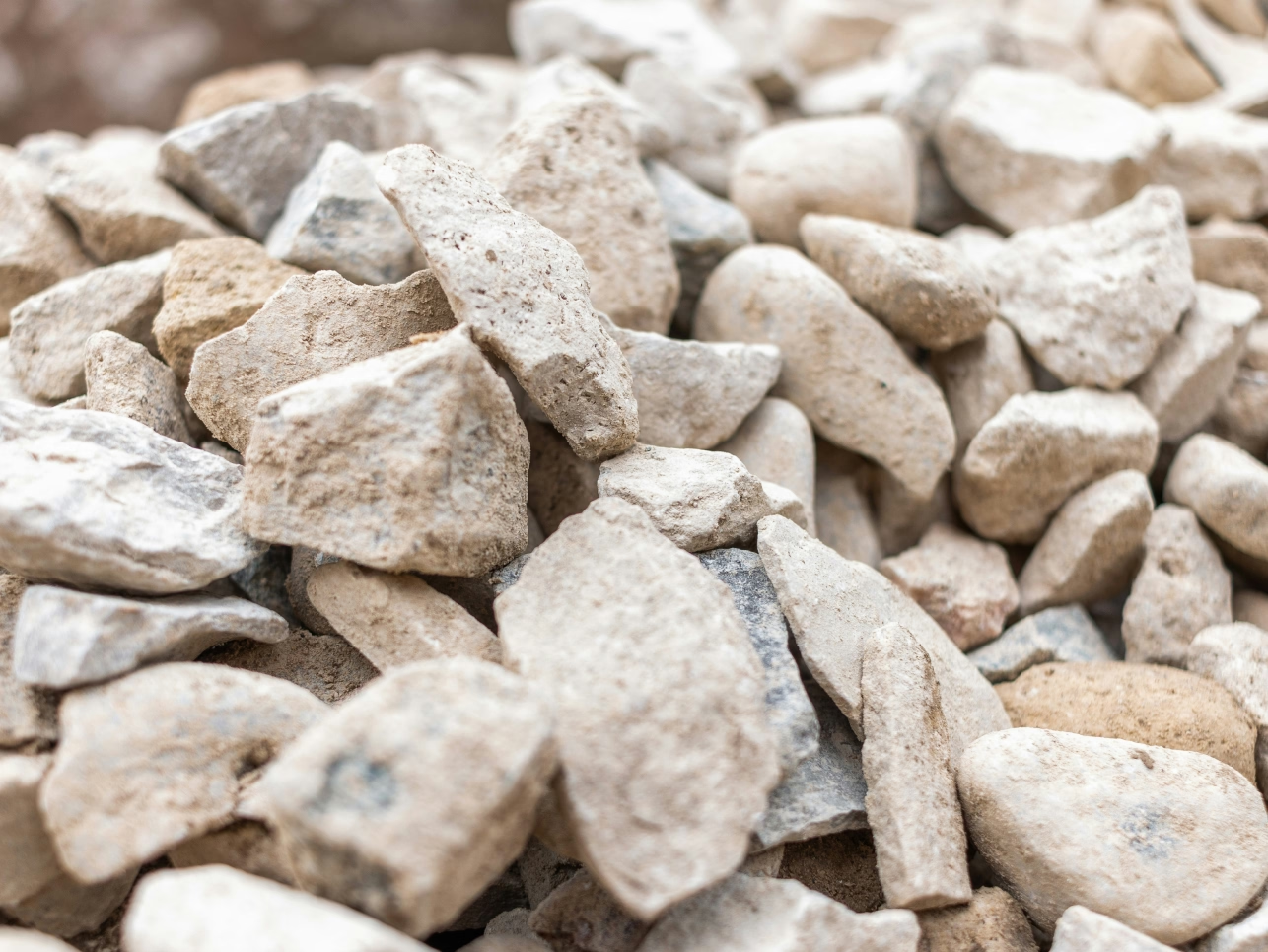
Stone paper is a type of paper made mostly from limestone (calcium carbonate, CaCO3) combined with a small percentage of plastic as a binder. At MOYU the ratio is 80% limestone and 20% HDPE (high-density polyethylene).
The limestone comes from quarries where it is normally left over as a waste product from the extraction of other materials. It is ground into a fine powder and then extruded with the HDPE into thin sheets. No trees, no water, no bleach.
The result is a paper that feels like regular paper in the hand, only slightly sturdier and smoother. It is water-resistant, tear-resistant and, in MOYU notebooks, erasable up to 500 times.
How is it different from regular paper?
Production process
Traditional paper is made from wood pulp, with a production process that uses a lot of water, energy and chemicals. According to industry estimates it takes around 10,000 liters of water to make one ream of A4 paper (500 sheets). For stone paper that is 0 liters in production itself.
Energy is another story. Stone paper production uses around 67% less energy than wood pulp paper, according to publications from the stone paper industry. CO2 emissions are correspondingly lower: in our own Life Cycle Assessment (ISO 14040/14044, conducted by Tessa Mouw in 2024) we come out at 0.37 kg CO2-equivalent per MOYU notebook, compared to 6.00 kg for an equivalent quantity of paper notebooks. That is 94% less.
Writing feel
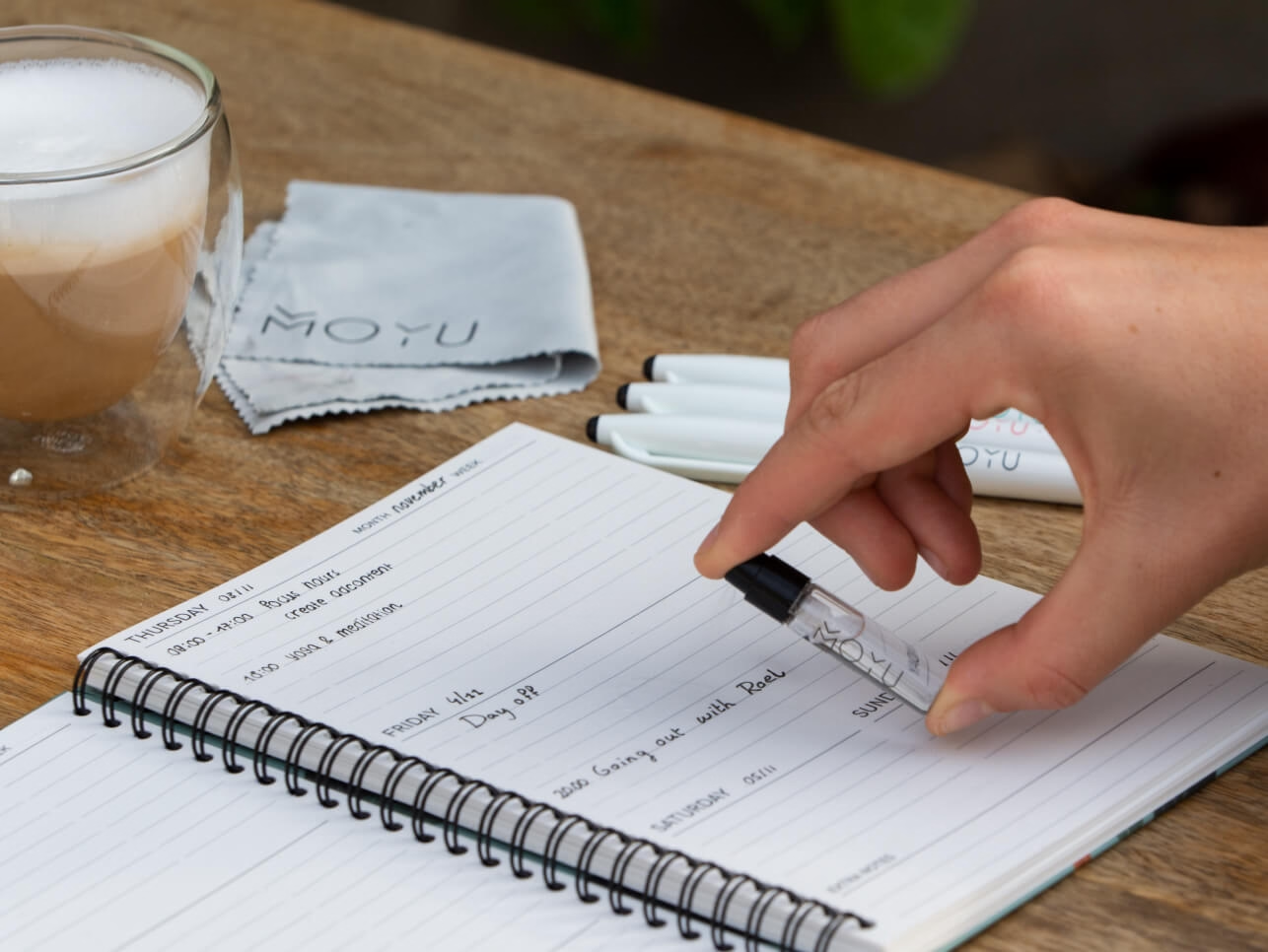
People who use stone paper for the first time are often surprised that it really feels like paper. It is not a plastic sheet, not a whiteboard-like surface. It writes smoothly and the ink dries quickly. With a special pen (like the MOYU pen or a Pilot FriXion) you can erase it with a damp cloth.
Lifespan
A MOYU stone paper notebook replaces approximately 15 paper notebooks measured over a 3-year use period. That saves raw materials and is often also cheaper in the long run.
How sustainable is stone paper really?
This is the question we get most often, and the honest version of the answer has three sides.
What stone paper does well
No tree cutting: limestone is not a threatened resource and is largely extracted from quarry waste streams.
No water in production versus around 1,585 liters for a paper equivalent notebook (LCA data).
94% lower CO2 emissions than a paper equivalent notebook (cradle-to-grave, ISO 14040/14044 LCA).
No bleach or chlorine in production.
Cradle-to-cradle material: from old stone paper sheets you can make pellets again and produce new stone paper directly. You do not have to separate the limestone and the HDPE.
No production waste in the factory: cutting offcuts go back to the palletizer and are reprocessed into paper.
The stone paper supplier in Taiwan holds Cradle to Cradle and ISO 14001 certifications.
What stone paper does not yet do well
We believe honesty is stronger than greenwashing, so the honest points:
Although the material is cradle-to-cradle, there is not yet a consumer-facing recycling stream specifically for stone paper in Europe. Notebooks reaching end of life through regular waste streams usually go to incineration with energy recovery. This is reflected in our LCA figures.
The 20% HDPE is virgin plastic (recycled HDPE is used for packaging, not for paper itself). That means it is not 100% plastic-free paper.
The raw material comes from Taiwan, which means sea freight transport. In our LCA that amounts to 0.08 kg CO2 per notebook, or 21% of the total footprint.
The pen you use to write on stone paper is plastic and contains specialty ink. There is also a footprint attached to that.
What we are doing about it
MOYU has set up the Stone Paper Alliance to build a European stone paper recycling infrastructure, with a target operational date of 2027. In addition, customers can send used MOYU notebooks back to us for processing through our Recycling Program.
Comparison table: stone paper versus wood pulp paper
Below the figures from our LCA, side by side. Functional unit: one A5 notebook used over a 3-year period (for MOYU one notebook, for pulp 15 notebooks to cover the same note volume).
Metric
MOYU stone paper
Wood pulp equivalent
CO2 (cradle-to-grave)
0.37 kg CO2e
6.00 kg CO2e
Water in production
0 L
Around 1,585 L
Trees
0
Around 0.05 trees
Energy savings
+1.56 GJ saved
Baseline
Tree planted
1 (Trees for Kenya)
0
Frequently asked questions
Is stone paper biodegradable?
Stone paper gradually breaks down under UV light and rain as the HDPE becomes more porous and the limestone is released. In controlled environments, like a waste processor, it is normally incinerated with energy recovery. It is not biodegradable in the strict sense (compostable in nature), but the limestone part eventually returns to nature as ordinary mineral.
Can you recycle stone paper?
Yes, and in a special way. The material itself is cradle-to-cradle: from old stone paper sheets you can make pellets again and produce new stone paper directly. At our supplier's factory this already happens, cutting offcuts go back to the palletizer and are reprocessed into paper. But for the end-user in Europe there is no large-scale return system yet. MOYU is working on such a system through the Stone Paper Alliance for 2027. Until then you can send your old MOYU notebooks back to us.
Is stone paper safe for food or children?
Stone paper is REACH, ROHS and FDA certified by the supplier. It contains none of the chemicals usually found in paper (chlorine, bleach).
Is stone paper water-resistant?
Yes. You can wipe off rain, coffee stains or a spilled glass of water without the paper warping. Long submersion in water is not recommended, and the ink on the page is water-dependently erasable.
How does it write compared to regular paper?
Most customers say it feels almost identical to paper, with slightly more glide. It is not a whiteboard-like experience and it is not a plastic sheet. The ink dries slightly more slowly than on regular paper (10-12 seconds).
Who is stone paper a good choice for?
Stone paper works well for:
People who take a lot of notes and do not want to keep buying new paper notebooks.
Companies that want to reduce their paper consumption and need concrete impact data for MVO or CSRD reporting.
Schools that want to combine sustainability with writing skill support.
Anyone who is sensitive to the feel of pen on paper and does not want to switch to a tablet or iPad.
It is less suitable for situations where you need to keep notes permanently in physical form, because the whole point is that you erase. But you can scan for digital storage.
Conclusion
Stone paper is not a perfect solution, but it is a measurably better solution than wood pulp paper for reusable notebooks. The numbers (94% less CO2, 0 water in production, no trees) are substantiated with an ISO-compliant LCA. The honest limitations (transport from Taiwan, no consumer-facing recycling stream in Europe yet, not 100% plastic-free) are also named.